
About Osteopathy
-
Osteopathy is a manual therapy, that assists the body's own ability to heal itself through light touch, manual manipulation and listening to each individual body. It is a hands on approach to encourage mobility, fluidity and balance within each system of the human body.
The osteopathic practitioner assesses and treats the skeletal, muscular, nervous, vascular, cranial and visceral systems to help restore mobility and overall health for each patient.
-
Osteopathy can address a wide range of conditions, including acute and chronic pain such as back pain, headaches, sports injuries, musculoskeletal disorders, digestive issues, and uro-gynecological pain.
It is also effective in treating concussions, whiplash, surgical scars, stress, as well as emotional and physical trauma, and the general wear and tear of daily life. -
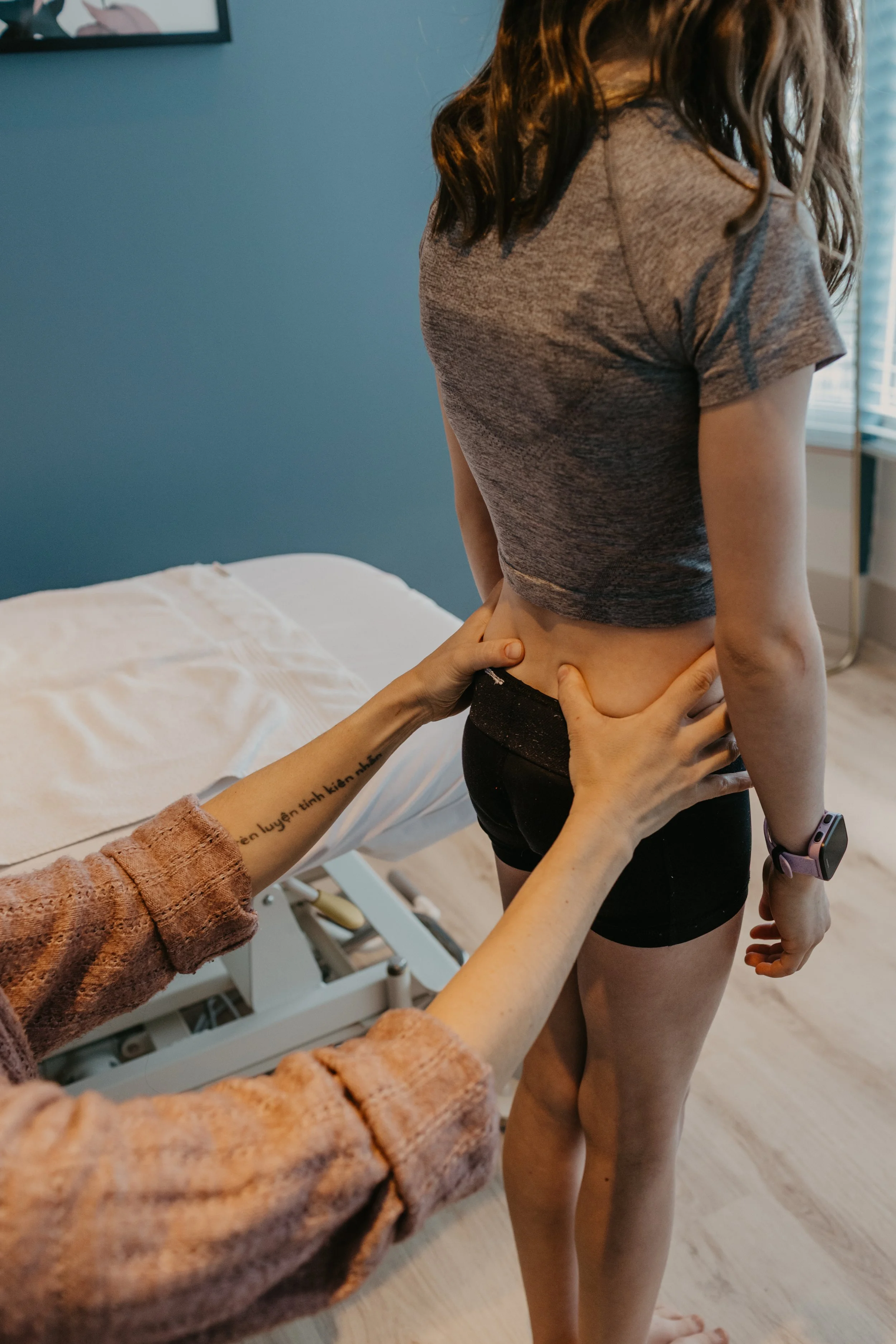
The patient will be assessed in standing, sitting and laying and then treated in accordingly. The treatment is gentle, light and should be comfortable throughout.
Patients can expect to have the therapist place their hands on their back, legs, arms, head, neck, pelvis, ribcage or belly under the verbal consent of the patient. The treatment will stop at any time if consent is removed by the patient.
-
Athletic attire that is comfortable and loose. Denim and tight hugging leggings and shirts are not ideal as they put tension on the tissue in an unnatural way.
Your osteopathic practitioner needs to be able to feel the tissues without conformity. Blankets are provided if the patient runs cold. The osteopathic practitioner will always work with the patients comfort level. You will never be asked to undress to a level you are uncomfortable with.

Chiropractic and Osteopathy
Understanding Two Complementary Approaches
Chiropractic and osteopathy are two well-established forms of manual therapy that help people improve mobility, reduce pain, and support overall well-being. Although they share similarities—both focus on the relationship between structure and function, both work with the musculoskeletal system, and both use hands-on techniques—their approaches, methods, and underlying philosophies differ in meaningful ways.
Osteopathy looks at the body as an integrated whole. Osteopathic practitioners consider how joints, muscles, fascia, fluids, organs, and the nervous system interact. Treatment is highly individualized, often gentle, and aims to restore balance, mobility, and physiological harmony. Techniques include soft-tissue work, myofascial release, mobilizations, cranial approaches, and visceral techniques. Osteopathy is especially appreciated for its adaptability across ages and its attention to the body’s interconnected systems.
Chiropractic, on the other hand, traditionally places emphasis on the spine and its influence on the nervous system. Chiropractors often use specific joint adjustments—sometimes fast and direct—to improve spinal mobility and support neurological function. Many chiropractors also incorporate exercise guidance, rehabilitation, soft-tissue techniques, and lifestyle advice into their care. Their work tends to be more structurally focused, particularly around the vertebral column, pelvis, and related joints.
Both professions aim to empower people on their health journey. Choosing between them depends on personal needs, comfort, and the type of condition being addressed. Many individuals benefit from seeing both types of practitioners at different points, depending on what their body requires. At White Rock Osteopathy, we collaborate with other healthcare providers and support whatever approach best serves each patient’s well-being.
-
No. They simply take different routes toward a similar goal: helping people move better, feel better, and function more efficiently. Many patients use both therapies at different times.
-
Not necessarily. The “best” approach depends on:
your condition
your comfort level
your health goals
how your body responds to each technique
Both professions have strengths, and both help people effectively.
-
Most people describe Osteopathy as gentle, relaxing, and highly personalized. Techniques may be slow, subtle, or deeply releasing, depending on what your body needs.
Chiropractic is often more direct and mechanical. Spinal adjustments may produce a quick sensation of release or improved mobility.
-
Absolutely. Many people alternate between therapies. They can complement each other well when coordinated.
-
Yes. Both osteopathy and chiropractic treat patients of all ages, from newborns to seniors, and also support athletes as well as prenatal and postpartum populations.
Please contact us if you have a specific condition, and we will guide you toward the most appropriate therapy.

Osteopathy Regulatory Body
OsteopathyBC is a regulatory body that governs Osteopathic Practitioners in British Columbia. We are an unregulated profession for the time being, and OsteopathyBC helps advocate for us, regulate the level of education it takes to become a Osteopathic Practitioner, and helps educate the public about Osteopathy.
If your manual osteopath is a member of OsteopathyBC, that means they have had extensive training in Canada or around the world.
Because Osteopathy is unregulated nationally, it is possible anyone can call themselves an Osteopathic Practitioner with a online weekend course! This of course is not the case at White Rock Osteopathy. We are all in good standing with OsteopathyBC.
For more information, please see the Osteopathy BC website.

“In Osteopathy, safety is not an option — it’s the foundation of every touch.”